A Survival Guide for Part-Time and Contingent Faculty
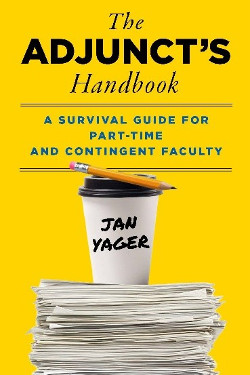 For most of my adult life, I’ve worn the badge of “adjunct”—teaching part-time (although for a brief period of two and a half years, I was full-time)—at a dozen colleges and universities across New York, New Jersey, Pennsylvania, Texas, and Florida. I’ve walked into classrooms energized, inspired, and hopeful but I noticed that too many other adjuncts that I met along the way seemed to be exhausted, disillusioned, feeling unappreciated, invisible, and even overwhelmed.
What I learned is that while there is no single roadmap for adjunct life, there are shared patterns, recurring challenges, and proven strategies that nearly every contingent faculty member will encounter. That’s why I wrote The Adjunct’s Handbook: to offer the guidance, clarity, and perspective I have gained from my own extensive experiences teaching undergraduate and graduate courses—both in person and remotely—enriched by the examples from interviews with more than sixty adjuncts and full-timers, along with findings from over one hundred surveys. My book was written to be practical, honest, and immediately useful guide for those considering adjunct work as well as those already living it.
In these pages, I walk you through the essentials of making adjunct life work for you, wherever you are on your journey. You’ll find clear guidance on applying for positions, negotiating pay and contracts, navigating institutional politics, understanding job security, benefits, and unionization, and evaluating whether adjuncting is truly a path to full-time employment—or something else entirely. Just as importantly, I address the emotional landscape of adjuncting: issues of stigma and self-esteem, professional identity, community-building, and the deep personal question many adjuncts eventually face—is it time to stay, shift, or step away?
A central strength of this handbook are the anecdotes and examples from real-life academics. You’ll hear from adjuncts who moved into full-time positions, from those who deliberately turned down full-time offers because adjuncting better supported their broader careers or personal lives, and from those who made the difficult—but empowering—decision to leave adjuncting behind. I don’t present a single “right” outcome. Instead, I explore the full range of paths adjuncts take, along with the tradeoffs, opportunities, and consequences that come with each choice.
I also name realities that are too often discussed only in hushed tones, if it’s discussed at all—particularly the stigma attached to contingent faculty status, including the self-stigma many adjuncts quietly internalize. By bringing these experiences into the open and
addressing them directly, my goal is to help adjuncts feel seen, informed, and empowered to make decisions that align with both their professional goals and their lives.
As Shelly Clevenger, Ph.D., Department Chair, of Sam Houston State University, writes in her advance praise:
“I will recommend this book to all the adjuncts in my own department and anyone who is teaching a course as an adjunct. It offers essential information that is useful, practical, and applicable.”
This is the book I wish had existed when I first stepped into the classroom—and one I believe belongs on the desk of anyone considering adjunct work, currently teaching as a contingent faculty member, or navigating the realities of long-term adjunct employment today.